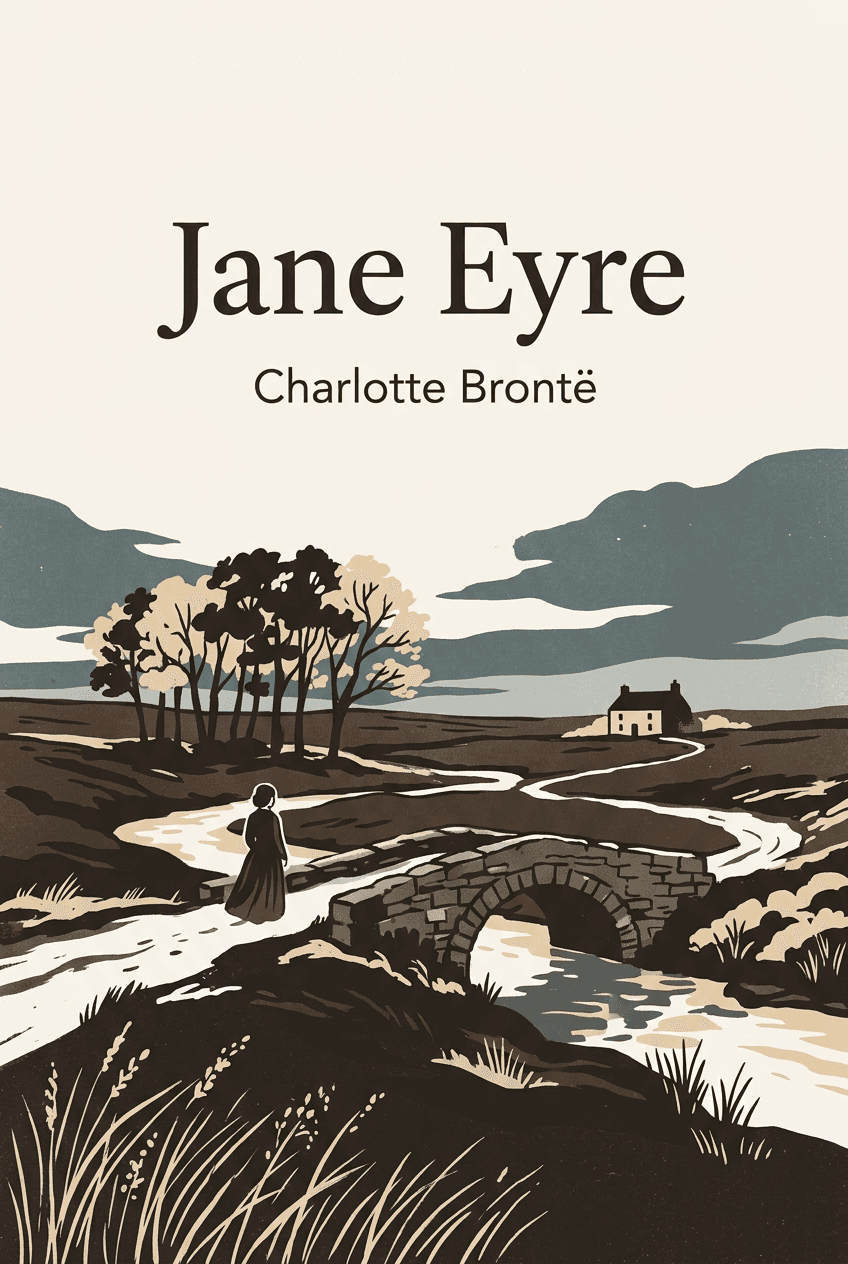
Charlotte Brontë · 1847 · Gothic Bildungsroman
Jane Eyre
A plain, poor, fiercely independent orphan tells her own story: a Gothic romance that is really about the right to belong to yourself.
14 guided chapters · ~21 hours of reading
What it’s really about
On its surface, Jane Eyre is a love story and a Gothic mystery: a young governess, a brooding master, a great house with a secret. Underneath, it is the story of a woman insisting on her own worth in a world that offers her almost none. Orphaned and unloved, Jane survives a cruel childhood and a harsh school, finds work and feeling at Thornfield Hall, and is asked again and again to trade her integrity for love or for safety. The novel follows her refusals as closely as her longings. It is passionate and principled at once, and it gives a poor, plain woman the dignity of telling her own life in her own words.
- Love & independence
- Belonging & home
- Class & money
- Faith & conscience
- Passion vs. reason
From the Foreword
Before page one, a short orientation: the world, the writer, and how to read this particular book. Cross the threshold when you are ready.
- The world you're entering
- The author's moment
- Themes to carry
- How to read this one
Who it’s for
For readers who love a strong first-person voice, Gothic atmosphere, and a romance with a conscience: anyone drawn to coming-of-age stories, to Daphne du Maurier or the moral weather of George Eliot, or to any heroine who would rather be free than comfortable. If you want feeling and principle together, with a storm or two along the way, this one is for you.