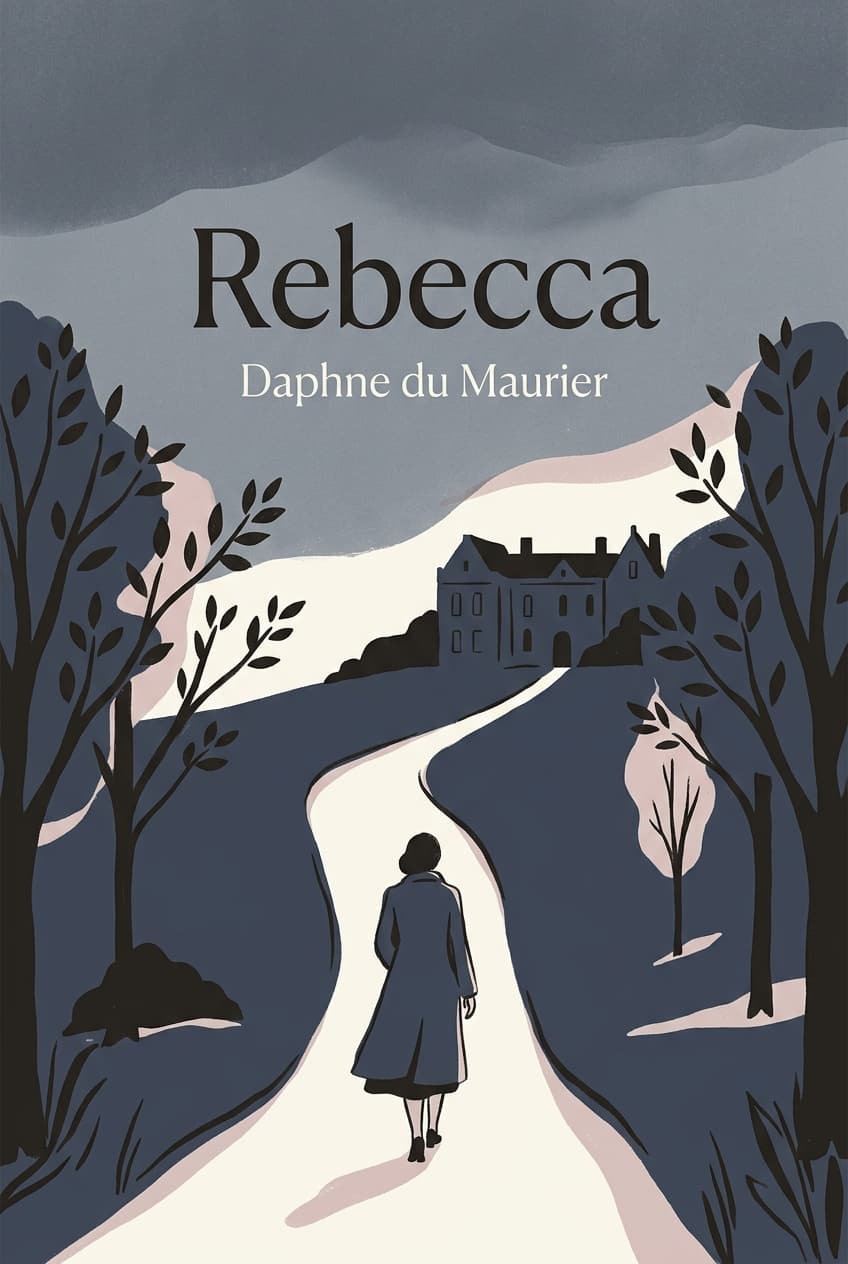
Daphne du Maurier · 1938 · Gothic suspense · Psychological
Rebecca
A nameless bride, a great house by the sea, and a first wife who refuses to stay dead.
15 guided chapters · ~15 hours of reading
What it’s really about
On its surface, Rebecca is a romance: a poor young companion marries a wealthy widower and goes home to his famous house. Underneath, it is a study of jealousy, class, and the power of the dead over the living. The second Mrs de Winter is never named; Rebecca, who is never seen, is named on almost every page. Du Maurier builds her suspense not from ghosts but from a housekeeper's devotion, a locked wing, and the slow accumulation of things a young wife is not told. It is one of the most controlled pieces of Gothic storytelling in English, and it turns, late, into something colder and stranger than its readers expect.
- Identity & namelessness
- The power of the past
- Jealousy & devotion
- Class & belonging
- Secrets & what is unsaid
From the Foreword
Before page one, a short orientation: the house, the writer, and how to read this particular book. Cross the threshold when you are ready.
- The world you're entering
- The author's moment
- Themes to carry
- How to read this one
Who it’s for
For readers who love Jane Eyre, The Turn of the Screw, or the slow-burn suspense of Patricia Highsmith and Shirley Jackson. If you like atmosphere that thickens page by page, an unreliable sense of who the villain is, and a house that is practically a character, Manderley is waiting.