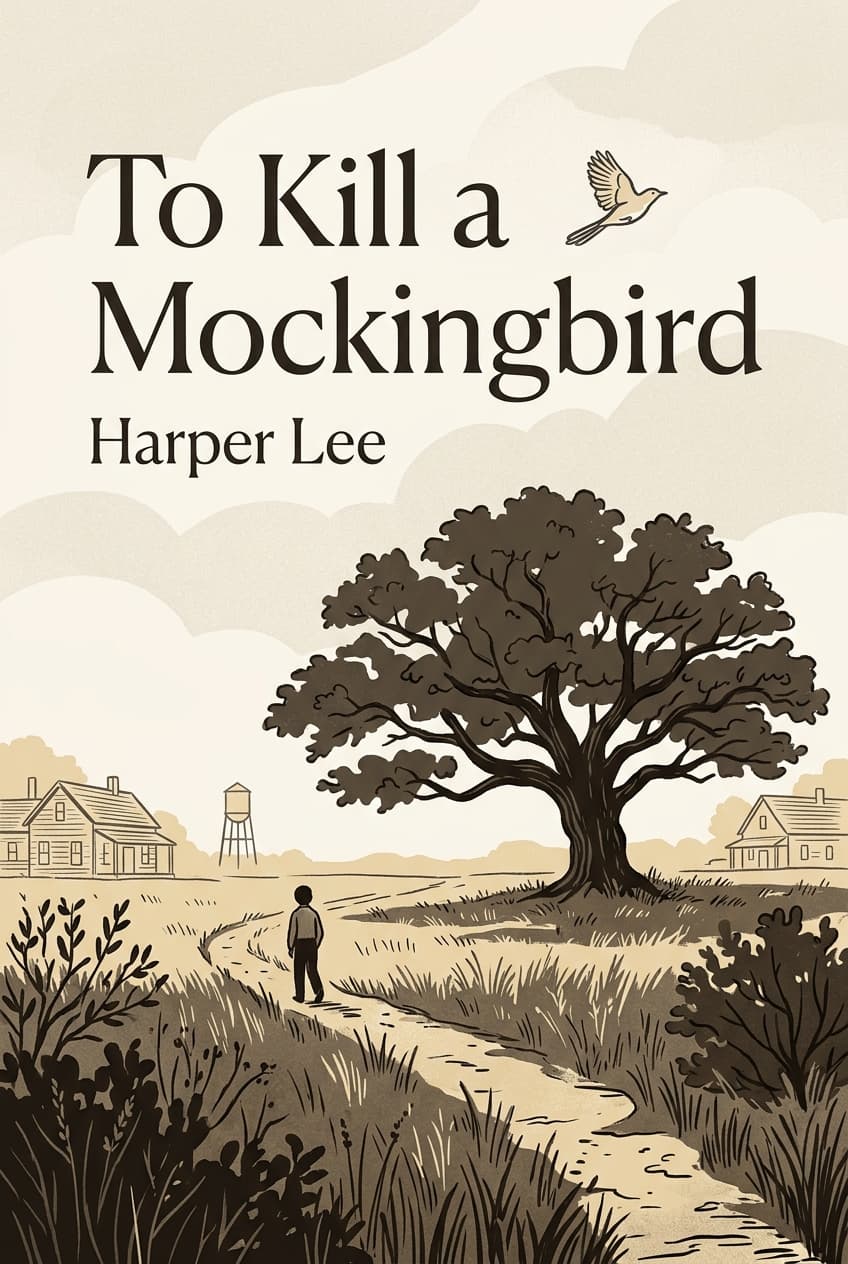
Harper Lee · 1960 · Southern Gothic · Coming-of-age
To Kill a Mockingbird
A grown woman looks back on the Alabama childhood — and the trial — that taught her what conscience costs.
14 guided chapters · ~11 hours of reading
What it’s really about
On its surface, this is the story of a few childhood years in a sleepy Alabama town — Scout, her brother Jem, and their friend Dill daring each other toward the house of a reclusive neighbor. Underneath, it becomes something far larger when their father, the lawyer Atticus Finch, takes on a case that forces the whole town to show what it really believes. It is a coming-of-age story about the moment a child first sees the adult world clearly — its kindness and its cruelty — and about what it costs, and means, to do right when everyone around you has already decided otherwise.
- Innocence and its loss
- Racial injustice
- Empathy and conscience
- Courage
- Small-town caste and class
From the Foreword
Before page one, a short orientation — the world, the writer, and how to read this particular book. Cross the threshold when you are ready.
- The world you're entering
- The author's moment
- Themes to carry
- How to read this one
Who it’s for
For readers who love a warm, immersive narrator and a strong moral spine — anyone drawn to coming-of-age stories, Southern settings, or courtroom drama with a conscience. If you want a book that is gentle and gripping at once, and that leaves you thinking about how you treat people, this is one of the great ones.