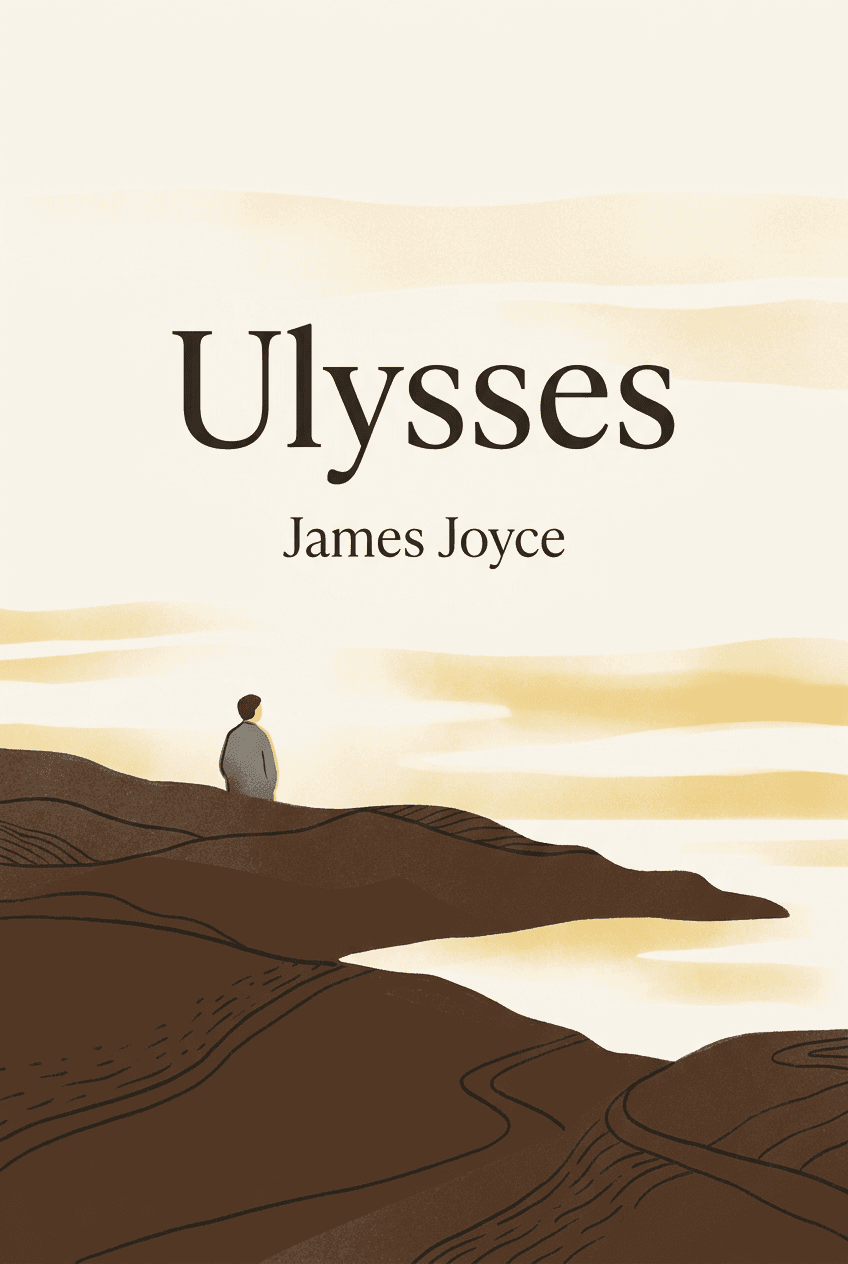
James Joyce · 1922 · Modernist fiction
Ulysses
One ordinary Dublin day, June 16, 1904, told as a secret retelling of the Odyssey, and the novel that remade modern fiction.
14 guided chapters · ~24 hours of reading
What it’s really about
On its surface, Ulysses is just one day in the life of a city: a young teacher named Stephen Dedalus, sharp and grieving, and an older man named Leopold Bloom, an advertising canvasser of unusual gentleness, moving separately through Dublin until their paths slowly converge. Underneath, Joyce maps their wanderings onto Homer's Odyssey, turning a kind, ordinary husband into a modern Ulysses whose heroism is simply getting through a hard day without cruelty. It is a book about loneliness and connection, about the body and the mind, about home and the people who lock us out of it. Above all it is a feat of voice: each chapter invents its own way of speaking, until the whole of Dublin seems to think on the page.
- Fatherhood & sonship
- Exile & home
- The ordinary as heroic
- Body & mind
- Memory & desire
From the Foreword
Before page one, a short orientation for what is often called the hardest great novel in English. The world, the writer, and a few honest words on how to read this particular book. Cross the threshold when you are ready, and know that you do not have to understand every line to be carried by it.
- The world you're entering
- The author's moment
- Themes to carry
- How to read this one
Who it’s for
For readers willing to be challenged and changed, anyone curious about the book that remade the modern novel, drawn to deep interiority and stylistic daring, or who loves Woolf, Faulkner, or Beckett. If you want the everyday rendered with total attention and a little patience for difficulty, this one is for you.